
Inductees in Founders of Rhode Island
-
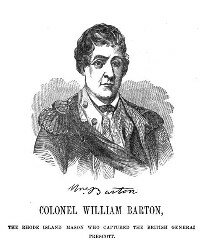
William Barton (1748-1831)
Inducted in 1999
William Barton, 1748-1831, of Warren and Providence, was a colonel in the Revolutionary army whose most notable exploit was to lead a daring raid in July, 1777 to seize General Richard Prescott, commander of the British forces occupying Aquidneck Island. In 1790 as a staunch Federalist, Barton served as a prominent delegate to the convention that ratified the federal Constitution. Read more >
-
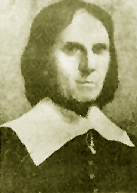
Rev. William Blackstone (1595-1675)
Inducted in 1995
Reverend William Blackstone (also spelled Blaxton), who lived in the Valley Falls Area of the Blackstone Valley, was the first European settler in the present RI State boundaries and the man whom the Blackstone River was named. A town bears his name, as do numerous parks, thoroughfares and valleys located in the valley he made famous and which later became the birthplace of the American Industrial Revolution. Rev. Blackstone is credited with creating the first American variety of apples. Read more >
-
.jpg)
Senator William Bradford (1729-1808)
Inducted in 2007
Senator William Bradford (1729-1808) was a fifth-generation descendant and namesake of the famous governor of Plymouth Colony. He began his career as a surgeon, but after his arrival in Bristol in the late 1750s, Bradford left medicine and turned to a new profession in the law, and was admitted to the bar in 1767. He established a practice at Bristol. He served the town as state representative and town moderator. Read more >
-
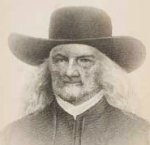
Moses Brown (1738-1836)
Inducted in 1999
Moses Brown, 1738-1836, the youngest of the five Brown brothers was a Providence civic leader, entrepreneur, sponsor of Samuel Slater, and prominent Quaker abolitionist. Moses Brown was also a founder of the Providence Athaneum and Moses Brown School. Read more >
-
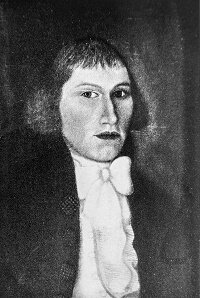
James Burrill, Jr. (1772-1820)
Inducted in 2000
James Burrill, Jr., 1772-1820, was chief justice, attorney general (1797-1813), speaker of the house (1814-1816), U.S. Senator (1817-1820), leader of the Federalist Party, brilliant lawyer and orator. Read more >
-
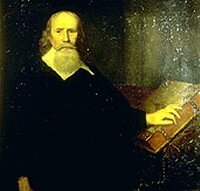
Dr. John Clarke (1609-1676)
Inducted in 1997
Dr. John Clarke, 1609-1676, was a physician, Baptist clergyman, and Statesman. As the Colony's agent in England he secured a liberal charter for Rhode Island in 1663 from King Charles II. He became one of Rhode Island's foremost advocates in the separation of Church and State. Read more >
-
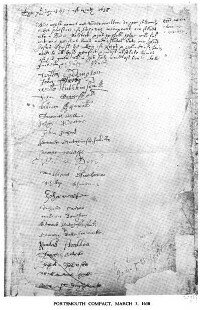
William Coddington (1601-1678)
Inducted in 1997
William Coddington, 1601-1678 was the founder of Portsmouth and Newport, and three-time Governor of Rhode Island. He was a shrewd politician and merchant, and had a large Newport Estate on which he bred livestock. Read more >
-
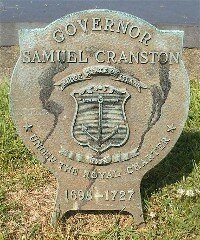
Gov. Samuel Cranston (1659-1727)
Inducted in 1998
Samuel Cranston, 1659-1727, of Newport, was a statesman and governor of Rhode Island for almost twenty-nine years--1698-1727--a tenure not only longer than any Rhode Island governor but also exceeding the tenure of any other chief executive of an American colony or state. Cranston presided over the transformation of Rhode Island from a beleaguered cluster of villages to a flourishing agricultural province. His outstanding accomplishment was to bring his colony into a working relationship with the imperial government in London while preserving its charter privileges.
Photograph of Samuel Cranston's grave medallion, Common Burying Ground, Newport, Rhode Island, 22 July 2011 c. Read more >
-
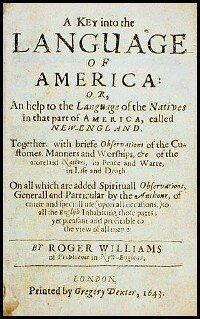
Gregory Dexter (1610-1700)
Inducted in 1997
Gregory Dexter, 1610-1700, was one of London's finest printers who became the printer for Roger Williams. He served Rhode Island during several crises and was elected President of the colony. He established a lime quarry in Lincoln that is one of the oldest continuous businesses in America. Read more >
-
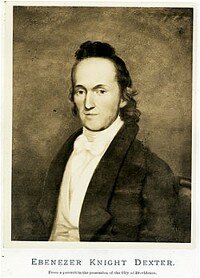
Ebenezer Knight Dexter (1773-1824)
Inducted in 2000
Ebenezer Knight Dexter, 1773-1824, prominent Providence merchant and a United States marshal who became Providence's greatest philanthropist. In his will he bequeathed nearly 2.3 million square feet of land to Providence for aid to the poor and other civic purposes including the training of militia. His most notable gifts were the Dexter Asylum and the Dexter training grounds. Read more >
-
Nehemiah Dodge (1775-1856)
Inducted in 1965
Nehemiah Dodge, 1769-1843 was a pioneering Rhode Island industrialist whose craft was that of "manufacturing jeweler". He is generally regarded as the principle founder of Rhode Island's costume jewelry industry. His most famous apprentice was Jabez Gorham (1792-1869), founder of the internationally renowned Gorham Manufacturing Company. Read more >
-
Silas Downer (1729-1785)
Inducted in 1998
Silas Downer, 1729-1785, was a prominent Providence attorney and civic leader, author, scrivener, and leader of the patriot cause. He has been called Rhode Island's "Penman of the Revolution." Downer's most patriotic treatise was a 1768 Discourse delivered in Providence repudiating Parliament's Declaratory Act. This essay has been cited as the first significant challenge to the authority of Parliament to make laws of any kind to regulate the colonies. Read more >
-
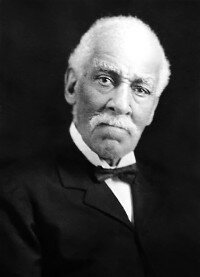
George T. Downing (1819-1903)
Inducted in 2003
George T. Downing, abolitionist, businessman, and civil rights advocate, was born in New York City on December 30, 1819 into a prominent, well-to-do African-American family. His father Thomas Downing was a restauranteur, whose Oyster House was a gathering place for New York's aristocracy and politicians. Under his father's guidance, young George participated in the Underground Railroad and lobbied to gain equal suffrage for blacks. Read more >
-
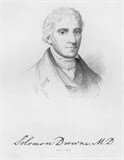
Dr.Solomon Drowne (1753-1834)
Inducted in 2000
Dr. Solomon Drowne, 1753-1834, a noted physician, graduated from Brown in 1773 with Senator Theodore Foster (1752-1828). He returned to Rhode Island from his far-flung travels in 1801 to settle in Foster. His estate, called Mount Hygeia, after the Greek goddess of health, became the setting for many botanical experiments and the formulation of several natural herbal remedies of note. Read more >
-
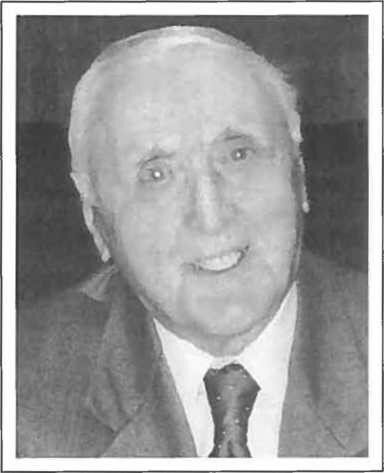
George Patrick Duffy (1922-2015)
Inducted in 2015
Normally sportscasters — with such notable excep- tions of Chris Schenkel and Chris Clark — do not gain accep- tance to the Rhode Island Heritage Hall of Fame, but if one is a sportscaster for seven decades, the voice of the Rhode Island Reds for a quarter-century, the longtime coach of youth sports in his community, a constant friend and supporter of disadvantaged and challenged children, and a Pawtucket civic leader, that per- son certainly qualifies. That per- son is George Patrick Duffy. George was born in Pa.wtucket in 1922, one of the seven children of Frederick and Emma (Locklin) Duffy. Read more >
-
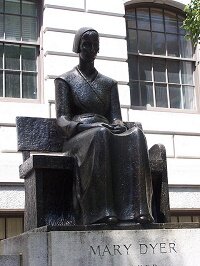
Mary Dyer (1611-1660)
Inducted in 1997
Mary Dyer, 1611-1660, was a Quaker missionary and martyr. She moved to Rhode Island in 1638 and become one of the founders of Portsmouth. She ultimately returned to Boston where she was hanged for supporting the Quakers.
Conn, J. Read more >
-
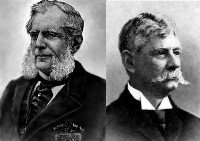
Governors Elisha & Elisha Jr. Dyer
Inducted in 2007
Dyer, Elisha, 1811-1890
Governor Elisha Dyer (1811-1890) and Governor Elisher Dyer, Jr. (1839-1909) traced their illustrious ancestry to William and Mary Dyer of Boston who settled Portsmouth in 1638 as exiled disciples of Anne Hutchinson. They eventually embraced Quakerism, and Mary repeatedly returned to Boston to preach the new doctrine in defiance of the Puritan magistrates. Such persistence earned her martyrdom. Read more >
-
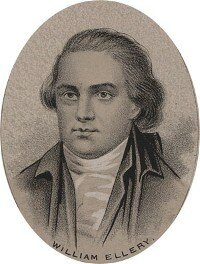
William Ellery (1727-1820)
Inducted in 1999
William Ellery, 1727-1820, of Newport was one of two Rhode Island signers of the Declaration of Independence. He was also an attorney, a Congressman, a leading Federalist and long-time collector of customs in Newport. Read more >
-
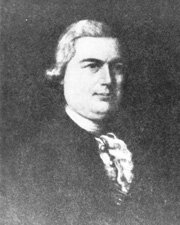
Theodore Foster (1752-1828)
Inducted in 2000
Theodore Foster, 1752-1828, a lawyer and long-time state legislator, served as town clerk (1775-1787) and supported the movement for independence. He was a prominent advocate of the federal Constitution. His efforts in support of ratification, together with his advantageous marriage to the sister of Governor Arthur Fenner, gained him election as one of Rhode Island's first U.S. Read more >
-
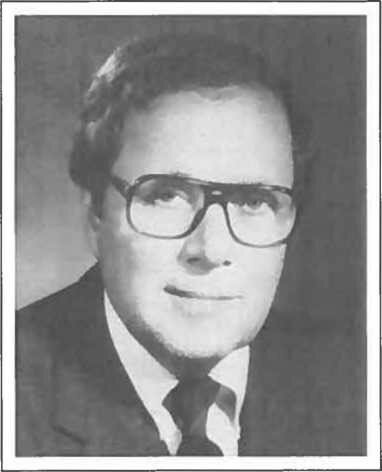
Sidney S Goldstein (1929-1995)
Inducted in 2017
Some individuals have been recognized for Hall of Fame induction because of the success and prominence of their business creations. Joseph Banigan, in whose building we conduct this ceremony, is one local example. He was a co-founder of U. S. Read more >
-
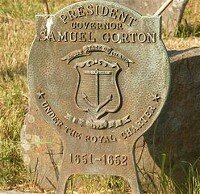
Samuel Gorton (1592-1677)
Inducted in 1973
Samuel Gorton, 1592-1677, was a colonial leader who was the first settler of Warwick, RI. He inspired the development of a religious sect called the Gortonists.
Photograph of Samuel Gorton grave medallion, Gorton Cemetery, Warwick, Rhode Island. Sarnold17 Wikipedia. Read more >
-
William Harris (1610-1681)
Inducted in 1997
William Harris, 1610-1687, was one of a handful of adherents who gathered with Roger Williams in exile and settled in Pawtuxet. He was an individual rights champion who added greatly to that early ferment that characterized Rhode Island. Read more >
-
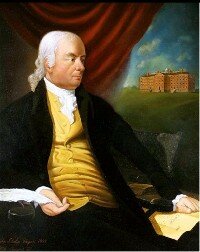
Stephen Hopkins (1707-1785)
Inducted in 1973
Stephen Hopkins, 1707-1785, was Governor of Rhode Island for ten years and a signer of the Declaration of Independence. Historians rate him as "one of the most illustrious citizens Rhode Island has ever produced.
Stephen Hopkins.John Hagen, 1999, Brown University Portrait Collection. Read more >
-
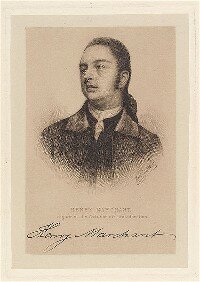
Henry Marchant (1741-1796)
Inducted in 1999
Henry Marchant1741-1796 from Newport and South Kingstown, was a well-educated intellectual and a protege of Ezra Stiles. Marchant, a prominent attorney, was an ardent Son of Liberty, a delegate to the Continental Congress, a leading Federalist and Rhode Island's first federal district judge. Read more >
-
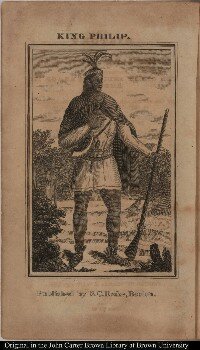
Metacomet Massasoit (1639-1676)
Inducted in 1997
Massasoit Metacomet, 1639-1676, was also known as King Phillip. He was the Sachem of all Sachems from the Royal House of the Pokanokets of the Wampanoags. A native patriot who tried to preserve his own civilization and his people's autonomy in the face of overwhelming odds. He died during the King Phillip War on the 12th of August, 1676. Read more >
-
Chief (Ousamequin) Massasoit (1581-1661)
Inducted in 2007
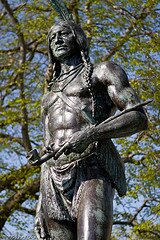
Chief Massasoit, also known as Ousamequin, (ca. 1581- 1661) was born in present-day Rhode Island. As chief sachem of the Wampanoag nation, he befriended the Pilgrims at Plymouth, taught them farming methods, and joined with them in a 1621 thanksgiving feast. He was a cordial host to the original Pilgrim settlers and sheltered Roger Williams during his winter exile in 1636. Read more >
-
Rev. Samuel Newman (1600-1663)
Inducted in 1997
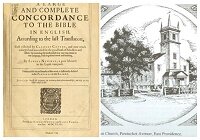
Reverend Samuel Newman, 1600?-1663 was a learned clergyman and the first prominent settler of present-day East Providence. He was acclaimed for his studies of the King James Bible, and established the Newman Congregational Church in what is now the Rumford section of East Providence. He has not received as much acclaim as other Rhode Island founders because his village at Rumford was beyond the boundaries of Rhode Island until the state annexed East Providence in 1862. Read more >
-
Col. Stephen Olney (1756-1832)
Inducted in 1999
Colonel Stephen Olney, 1756-1832, of North Providence, was a leader of the Second Rhode Island Regiment attaining the rank of Colonel. He fought in numerous campaigns from Bunker Hill to Yorktown. Olney is credited with saving the life of future President James Monroe at the Battle of Princeton, and he was a close and respected colleague of General Lafayette. Read more >
-
Leonard J Pannaggio (1919-2012)
Inducted in 2016
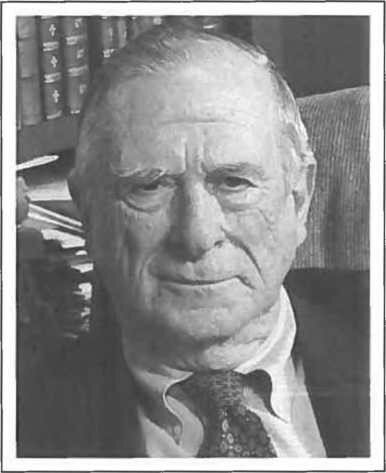
Leonard J. Panaggio of Newport was one of Rhode Islands all-time leaders in the promotion of tourism to the Ocean State. Few, if any, before or since, have done as much to promote Rhode Island, and especially Newport, as a tourist destination. Len worked so diligently in the tourism field not only because of his love for the history of Rhode Island, as expressed in his writings, but because he recognized tourism as an industry that could promote the Rhode Island economy. Read more >
-
John Aldrich Saunders, Jr. (1808-1882)
Inducted in 2007
John Aldrich Saunders, Jr. (1808-1882) was the central figure, chronologically and symbolically, of the noted South County family of boat builders, marine entrepreneurs, and seamen. He was born in Newport, the grandson of Stephen Saunders, a shipwright, and the son of Captain John Aldrich Saunders (1786-1832), who built one of the first three-mastered schooners and discovered that the buttonwood tree provided the best wood for a ship's keel. In all, Captain Saunders, Sr. Read more >
-
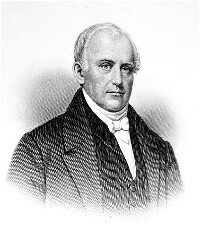
Samuel Slater (1768-1835)
Inducted in 1965
Samuel Slater, 1768-1835, an English-born textile operative and inventor, has been called the "Father of American Manufacturing". He migrated to Rhode Island from Derbyshire in 1789, and, in concert with Rhode Island investors and craftsman, built and activated spinning frames at Pawtucket Falls that were modeled on those of English inventor Richard Arkwright. On December 20, 1790, he spun cotton yarn from water powered machinery for the first time in America. Read more >
-
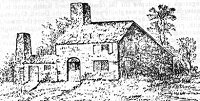
Richard Smith (1596-1666)
Inducted in 1997
Richard Smith, 1596-1666, was an entrepreneur and by far the most important early settler of South County, RI. >He constructed Smith's Castle, or Cocumscussoc in Wickford. Read more >
-
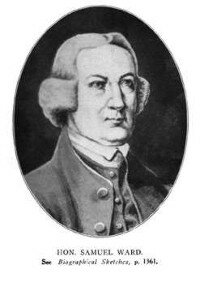
Gov. Samuel Ward (1725-1776)
Inducted in 1998
Samuel Ward,1725-1776, of Westerly, co-founder of America's first party system, governor, chief justice, and Revolutionary War leader. He was the son of Rhode Island governor and gentleman farmer Richard Ward (1740-1742). He joined his great political rival Stephen Hopkins as the two Rhode Island delegates to the Continental Congress in the movement toward independence. Only his untimely death in the spring of 1776 prevented Ward from becoming a Rhode Island signer of the Declaration of Independence. Read more >
-
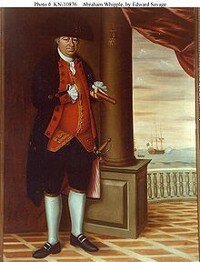
Abraham Whipple (1733-1819)
Inducted in 1999
Abraham Whipple,1733-1819, from Providence, was a renowned privateersman and naval officer. An ally of the Brown family, he directed the raid of the Gaspee and commanded the U.S. Navy's first ship, Providence, in several successful encounters with the British. Read more >
-
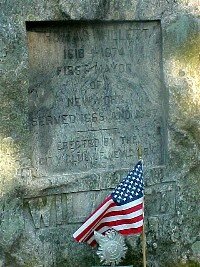
Thomas Willett (1605-1674)
Inducted in 1997
Captain Thomas Willett,1605-1674, was the principal early settler of Wannamoisett (present-day Riverside and northern Barrington). As a trusted friend of the natives he bought large tracts of land from them. He later became the first Mayor of New York City after helping to wrest it from the Dutch. Read more >
-
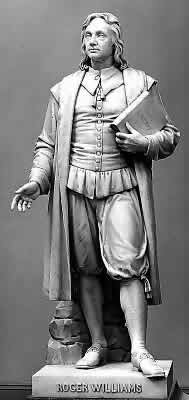
Roger Williams (1603-1683)
Inducted in 1965
Roger Williams, 1603-1683, an English clergyman who was banished from Massachusetts Bay Colony for his teachings and, in 1636, became the founder of Providence, Rhode Island's first white settlement. Williams' pioneering views included religious liberty, complete separation of church and state, and fair treatment of the Native Americans. In 1643 he published "A Key into the Language of America", the first English language dictionary and ethnography of an American Indian people. Read more >

Browse through our collection of 750+ amazing Rhode Islanders:
Search by Name or Keyword:
Area of Accomplishment:
African Americans | Agriculture / Farming | Architects & Designers | Artists & Painters | Banking / Finance | Business / Entrepreneurs | Civic Leaders | Civil Engineer | Civil Rights / Abolitionists | Clergy | Craftsmen | Dance | Econonomics / Theory | Education & Universities | Entertainment Development | Explorers & Adventurers | Famous RI Families | Food / Culinary | Founders of Rhode Island | Government & Politics | Historians/Historical Accounts, Preservation | Immigrants: Chinese | Immigrants: Irish | Immigrants: Portuguese | Industry - General | Industry - Jewelry | Industry - Maritime | Industry - Textiles | Inventors & Inventions | Labor / Unions | Law / Legal Pioneers | Literature / Writers / Newspapers | Medicine & Health Care | Military | Music (Singers, Composers) | Native Americans | Olympic Athletes | Philanthropists | Religion & Churches | Retail Pioneers | Rogues | Sports - Baseball | Sports - Basketball | Sports - Football | Sports - Golf | Sports - Hockey | Sports - Other | Sports - Tennis | Sports - Track and Field | Technology & Science | Theater | TV & Radio | Women |